
Reviewed · HISTORICAL TOURS
Santorini History & Archeology Tour
Santorini goes prehistoric fast. In about 5 hours, you’ll visit the island’s biggest archaeology hits: Ancient Thera, Akrotiri, and the Museum of Prehistoric Thira. What makes this one feel special is that Akrotiri isn’t just a drive-by stop; you get a private, licensed guide experience inside the excavations.
I especially like the mix of high-and-low history, from mountain-top ruins to the underground-like story of Akrotiri’s preserved past. I also appreciate the practical comfort: air-conditioned transport plus bottled water and soda/juice helps you stay functional during exposed walking. One thing to consider: the ruins sit up on the slopes, so you’ll want moderate fitness and good shoes for uneven stone and stairs.
In This Review
- Key things to know before you go
- Why this Santorini route makes sense for history fans
- The 9:00 a.m. start, pickup, and small-group advantage
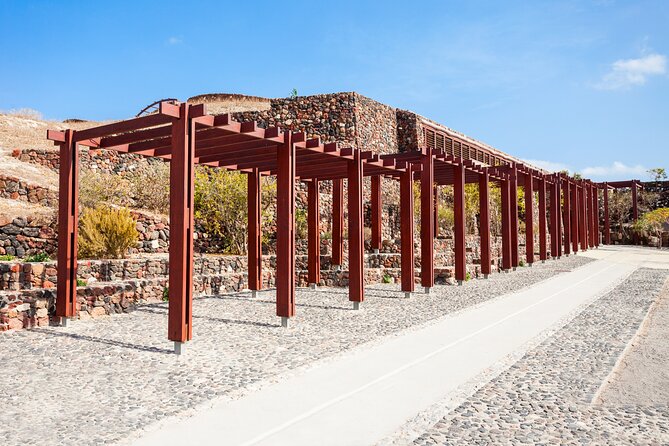
- Stop 1: Ancient Thera on Mesa Vouno (ruins, views, and altitude)
- Stop 2: Akrotiri excavations and a private licensed guide
- Stop 3: Museum of Prehistoric Thira (turn finds into a story)
- What’s included: entrances, guide time, and the “don’t melt” refreshments
- Price and value: is $289.40 worth it?
- Who this tour fits best (and who might want a different plan)
- Practical tips so you get the most from your morning
- Should you book this Santorini history and archaeology tour?
- FAQ
- How long is the Santorini History & Archeology Tour?
- What stops are included in the itinerary?
- Is pickup included?
- What’s included in the price?
- Is lunch included?
- What should I know about fitness and weather?
Key things to know before you go
- Three major sites in one tight morning, with smart pacing between each stop
- Private licensed tour inside Akrotiri (about 1.5 hours), not just a quick look from outside
- Admission tickets included at every stop, so you’re not hunting for entrances on-site
- Small group size (max 8) for easier questions and less rushing
- Comfort perks like AC, bottled water, and simple drinks during the ride
Why this Santorini route makes sense for history fans
This tour works because it tells a story in the right order. You start on the slopes with the ancient city of Thera, then you move to Akrotiri—an earlier, startlingly sophisticated community—and finish by tying it together at the museum, where the finds stop being random objects and start making sense.
Ancient Thera gives you the big “how life worked” view. It was founded by Theras in the 9th century BC, perched high up around Mesa Vouno (about 400 meters above sea level). Akrotiri gives you the “how people lived before that” perspective. You’ll hear about a settlement dating back to the 5th millennium BC, known for technical and cultural achievements that don’t feel believable until you see the excavated remains. Then the museum step is your reality check. The Museum of Prehistoric Thira focuses on what came out of Akrotiri excavations, plus relevant material from other island sites.
If you like history that actually clicks—when one place explains the other—this format is a win.
Deeper into the island past
- Akrotiri Family Treasure Hunt ,kid friendly Archeology Adventure★ 4.5 · 14 reviews
- The Beer And The History semi private Experience★ 5.0 · 6 reviews
- Private Santorini History and Wine Tasting 5-Hour Tour★ 4.5 · 6 reviews
The 9:00 a.m. start, pickup, and small-group advantage
You start at 9:00 am, which matters more than people think in Santorini. The day warms up fast, and the sites include open, exposed areas. An early start is your best friend for comfort and photos. Even if you’re not a “morning person,” you’ll likely feel better in the heat than if you show up later with your energy already evaporating.
Pickup is offered, and you’ll travel in an air-conditioned vehicle. That’s not flashy, but it’s genuinely useful. Santorini’s roads can feel bumpy, and you’ll be doing walking that’s not exactly flat. With a group limited to 8 travelers, you get enough room for the guide to adjust the pace if people need a slower moment.
In prior experiences with this operator, guides like Tasos and Ted have been highlighted for clear communication and thoughtful timing—especially around heat—so the day doesn’t turn into a sprint.
Stop 1: Ancient Thera on Mesa Vouno (ruins, views, and altitude)
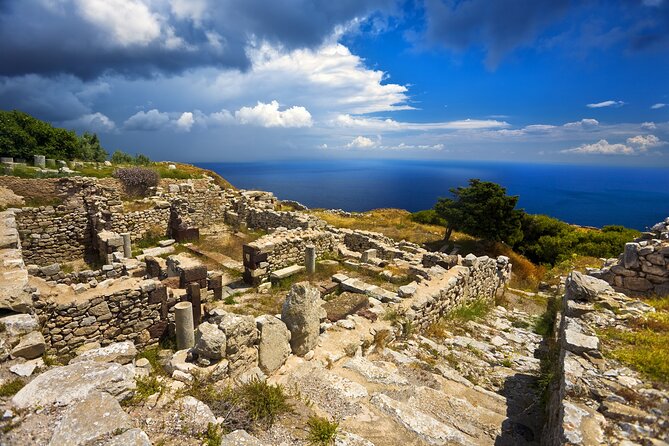
Ancient Thera sits up on Mesa Vouno, reachable by a climb that takes you almost 400 meters above the sea. The altitude changes the feel of the visit. The air can be a bit cooler than down in the caldera towns, and the views are part of why this place is memorable.
You’ll have about 1 hour here, which is enough time to wander the main remains without feeling like you’re stuck in a museum line. The ruins include the kind of structures that make you imagine everyday life—houses, public spaces, and the layout that suggests how a community organized itself on a steep island.
Practical reality check: mountain-top ruins mean sun, wind, and uneven ground. Bring sun protection and take your time on stairs and stone paths. If your legs get tired, plan to pause more than you would in a flat city. You’re there to understand, not to prove endurance.
Stop 2: Akrotiri excavations and a private licensed guide
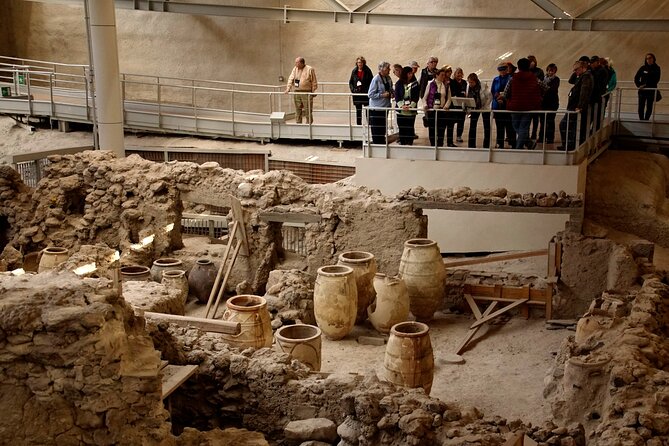
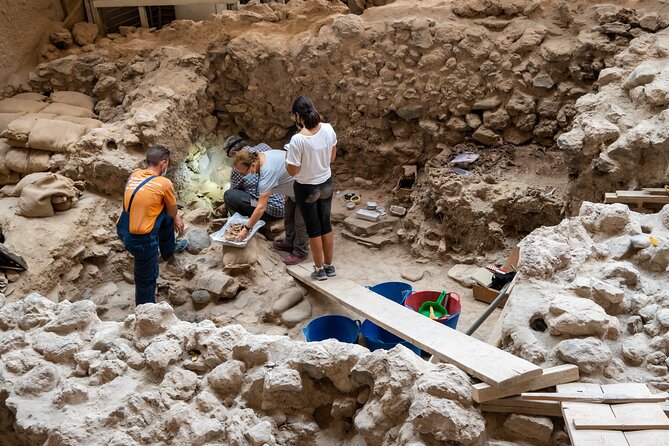
Akrotiri is the star for a reason. This isn’t just one building or one courtyard. It’s an entire excavated settlement, dating back to the 5th millennium BC, and the preservation level makes it feel like the island’s past froze mid-sentence. The sophistication people talk about isn’t hype; it’s visible in the way the settlement is laid out and how advanced the community appears compared to what you might expect from such an early period.
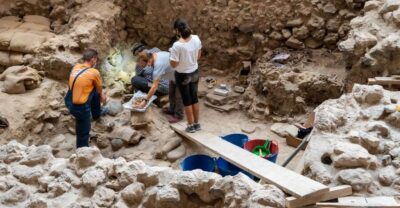
Expect about 2 hours total at Akrotiri, including a private tour inside the excavations for around 1.5 hours with a licensed guide. That private format matters. You’ll get more targeted explanations than you would with a bigger crowd, and you can ask questions as you walk. Past guests specifically praised the licensed archaeological guide for bringing the city to life with strong narration.
Also, Akrotiri is one of those places where your brain needs context. Without guidance, you might see ruins and wonder what you’re looking at. With a licensed guide, you learn what features mean and how they connect to the wider story of Santorini.
One tip: if you’re into photography, this stop is where you’ll want your camera ready. Since the excavations are open and structured, you can get clear frames of the settlement layout. Just be mindful of walking carefully over uneven surfaces.
Back through old Santorini




Stop 3: Museum of Prehistoric Thira (turn finds into a story)
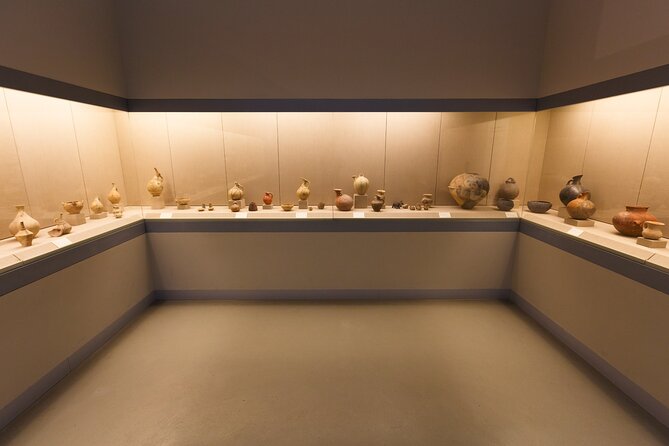
After Akrotiri, the Museum of Prehistoric Thira helps everything click into place. You’ll have about 1 hour here, and the museum is designed to show what came out of the excavations at Akrotiri, along with material from other key island sites.
This stop is valuable because it slows you down. Up at the ruins, you’re reading space and layout. In the museum, you’re reading objects—tools, artworks, everyday items—that suggest how people thought, worked, and expressed culture. Even if you only spend an hour, the payoff is big because you’re not leaving with guesses.
The museum also functions like air-conditioning for your brain. Santorini’s sun can be relentless; an indoor stop gives your body a break while you absorb the details you missed in motion.
What’s included: entrances, guide time, and the “don’t melt” refreshments
The price includes entrance fees in all three stops and the museum. That means you’re not doing the classic vacation math of deciding whether a ticket is worth it once you arrive.
You also get mineral water (500 ml), plus orange juice and Coca-Cola or other refreshment during the trip. I like this setup because it’s not trying to be a full meal. It’s enough to keep your energy steady while you’re out walking and transitioning between locations.
Lunch is not included, so if you’re the type who gets hungry fast, plan a post-tour meal. Many people time a lighter breakfast and rely on the included drinks during the ride. If you tend to run on caffeine only, consider packing a small snack for yourself—nothing fancy, just something you can handle while you’re out.
Price and value: is $289.40 worth it?
At $289.40 per person, this isn’t the cheapest way to see archaeology on Santorini. The question is what you’re paying for.
Here’s the value equation as I see it:
- Admissions included for each major site and the museum. That usually adds up fast on a Greek island.
- A licensed, private Akrotiri tour for around 1.5 hours. This is the biggest differentiator. You’re not just browsing; you’re guided through the excavations.
- Small group size (max 8). That usually means less waiting, more interaction, and a smoother pace.
- Air-conditioned transport plus drinks. It’s not luxury, but it reduces fatigue. And fatigue kills good learning.
Also, the tour is commonly booked about 41 days in advance, which suggests people plan this carefully—usually because it fits well into a limited-time Santorini schedule.
If you only want one archaeology-focused block, this can be a solid use of your time, especially if Akrotiri is on your list. If you’re trying to do Santorini on a tight budget and want lots of free roaming, you might feel the price more. But if you want guided context at the island’s most important sites, the structure is set up for it.
Who this tour fits best (and who might want a different plan)
This is a good match if you:
- care about history and archaeology enough to want explanations, not just photos
- like a structured route that keeps you from bouncing randomly around the island
- enjoy small groups and clearer pacing
You might want to consider another option if you:
- prefer fully flexible stops with no guided pacing
- have trouble with moderate walking on uneven paths and stairs
- want a long beach-and-cafe style day
The tour notes moderate physical fitness as the requirement. That doesn’t mean you need to be an athlete. It does mean you should plan for some uphill terrain and stone surfaces.
Practical tips so you get the most from your morning
A few things that’ll make your time smoother:
- Wear comfortable walking shoes. Ruins paths can be uneven, and you’ll be on your feet for hours.
- Bring sun protection (hat, sunscreen). Ancient Thera and Akrotiri include open areas.
- Travel light. You’ll move between sites, and you don’t want heavy bags slowing you down.
- For photos, think in “segments.” Ancient Thera is your altitude-and-ruins zone; Akrotiri is your structured-excavation zone; the museum is your close-up details zone.
One more small but smart move: drink water early, not when you already feel thirsty. The included water and drinks help, but heat adds up quickly on Santorini.
Should you book this Santorini history and archaeology tour?
I’d book it if you want high-impact archaeology in one morning and you value guided interpretation, especially at Akrotiri. The combination of admissions included, AC transport, small group size, and the private licensed tour time makes this feel like a thoughtfully built experience rather than a rushed bus circuit.
I’d skip or swap it if you’re mainly in Santorini for viewpoints and beaches and you don’t care much about the archaeological context. Also, if uneven stone and moderate walking are a concern, you’ll want to think carefully before committing.
If you’re excited by the idea of standing in places that date back from prehistoric times through classical eras—and having someone translate the meaning as you go—this is a strong choice.
FAQ
How long is the Santorini History & Archeology Tour?
The tour lasts about 5 hours.
What stops are included in the itinerary?
You’ll visit Ancient Thera, the Akrotiri Archaeological Site, and the Museum of Prehistoric Thira.
Is pickup included?
Pickup is offered, and you’ll start at 9:00 am.
What’s included in the price?
The price includes air-conditioned vehicle, bottled water and refreshments (500ml mineral water plus orange juice and Coca-Cola or similar), entrance fees at the archaeological sites and museum, and a private guided tour by a licensed guide at Akrotiri (about 1.5 hours).
Is lunch included?
No, lunch is not included.
What should I know about fitness and weather?
The tour requires moderate physical fitness. It also requires good weather, and if poor weather cancels the experience, you’ll be offered a different date or a full refund.
More Tours in Santorini
- Santorini: Catamaran Tour with BBQ Dinner, Drinks, and Music
★ 4.6 · 5,886 reviews - Santorini: Traditional Sightseeing Bus Tour with Oia Sunset
★ 4.6 · 2,306 reviews - Santorini: Catamaran Tour with BBQ Meal and Unlimited Drinks
★ 4.8 · 1,449 reviews - Santorini Caldera Cruise Tour (Volcano, Hot Springs, Thirassia)
★ 4.5 · 1,302 reviews - Santorini Wine Stories: Sunset Tour with Tasting & Dinner
★ 5.0 · 1,285 reviews
More Tour Reviews in Santorini
- Santorini: Volcanic Islands Cruise with Hot Springs Visit
★ 4.4 · 10,869 reviews - Santorini: Catamaran Tour with BBQ Dinner, Drinks, and Music
★ 4.6 · 5,886 reviews - Premium Small-Group Catamaran Cruise with BBQ, Open Bar, Transfer
★ 5.0 · 4,209 reviews - Santorini Classic Catamaran Cruise with BBQ, Drinks and Transfers
★ 5.0 · 3,933 reviews - Santorini: Luxury Catamaran Day Trip with Meal and Open Bar
★ 4.8 · 3,678 reviews
The Island Story, Told Properly
- Akrotiri Family Treasure Hunt ,kid friendly Archeology Adventure
★ 4.5 · 14 reviews - Santorini Archaeology and Wine Small-Group Tour with Tastings
★ 5.0 · 7 reviews - The Beer And The History semi private Experience
★ 5.0 · 6 reviews - Private Santorini History and Wine Tasting 5-Hour Tour
★ 4.5 · 6 reviews - Terroir Santorini – Volcanic Heritage & Wine Experience
★ 5.0 · 6 reviews
Just Reviewed: Fresh Santorini Trips



Historical Tours, compared.
 ★ 4.5Private Santorini History and Wine Tasting 5-Hour TourFrom $3276 reviews
 ★ 5.0The Beer And The History semi private ExperienceFrom $416 reviews
 ★ 5.0Terroir Santorini – Volcanic Heritage & Wine ExperienceFrom $5366 reviews
 ★ 5.0History and Traditional villages around SantoriniFrom $3763 reviews
 ★ 5.0HISTORY & ARCHEOLOGY Tour (up to 8 guests)From $2713 reviews
 ★ 5.0Enchanting Santorini A Journey Through History and SceneryFrom $4523 reviews
Browse the lists this tour appears in